Red Light and near-infrared therapy in Chelmsford.
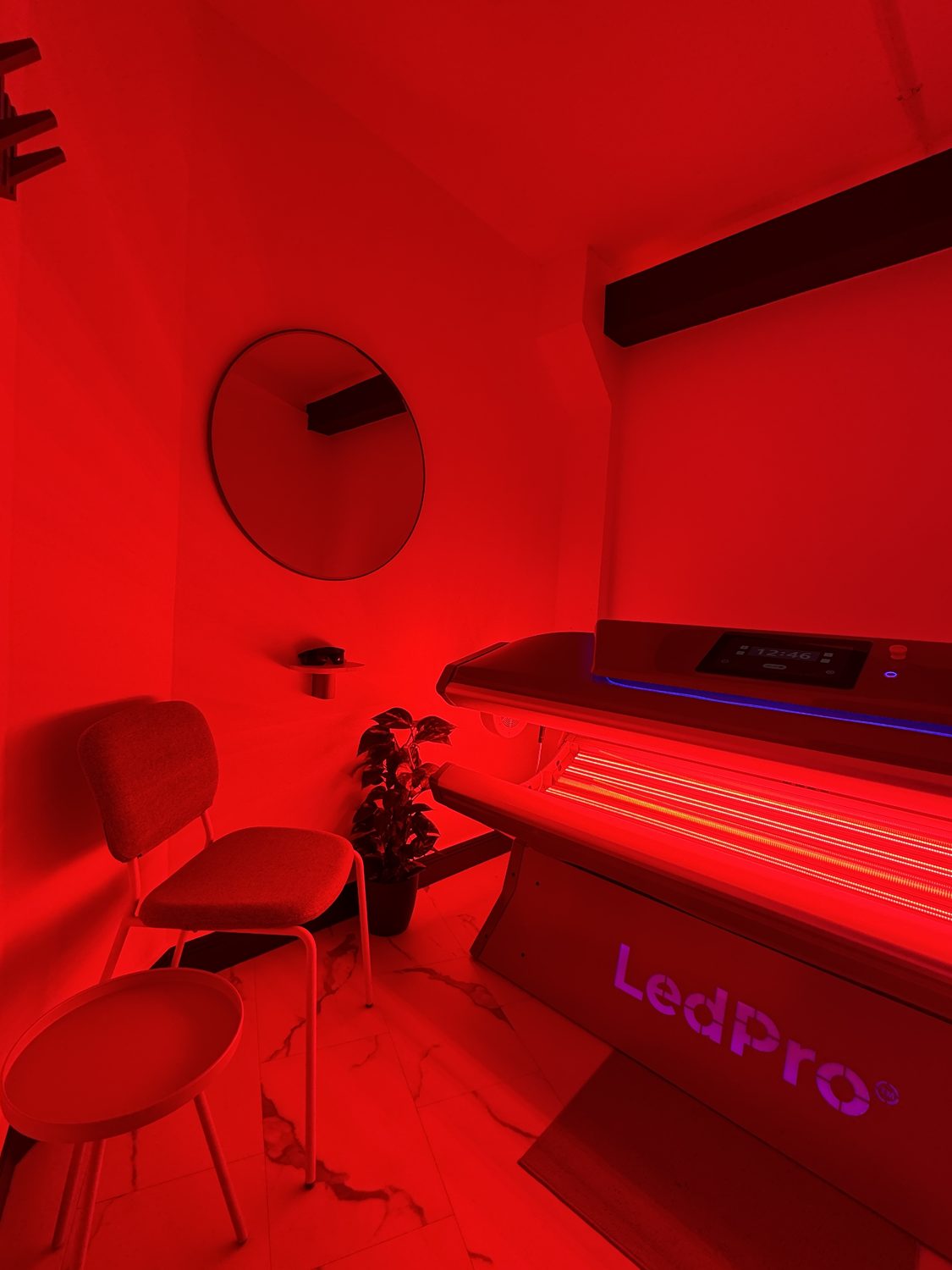
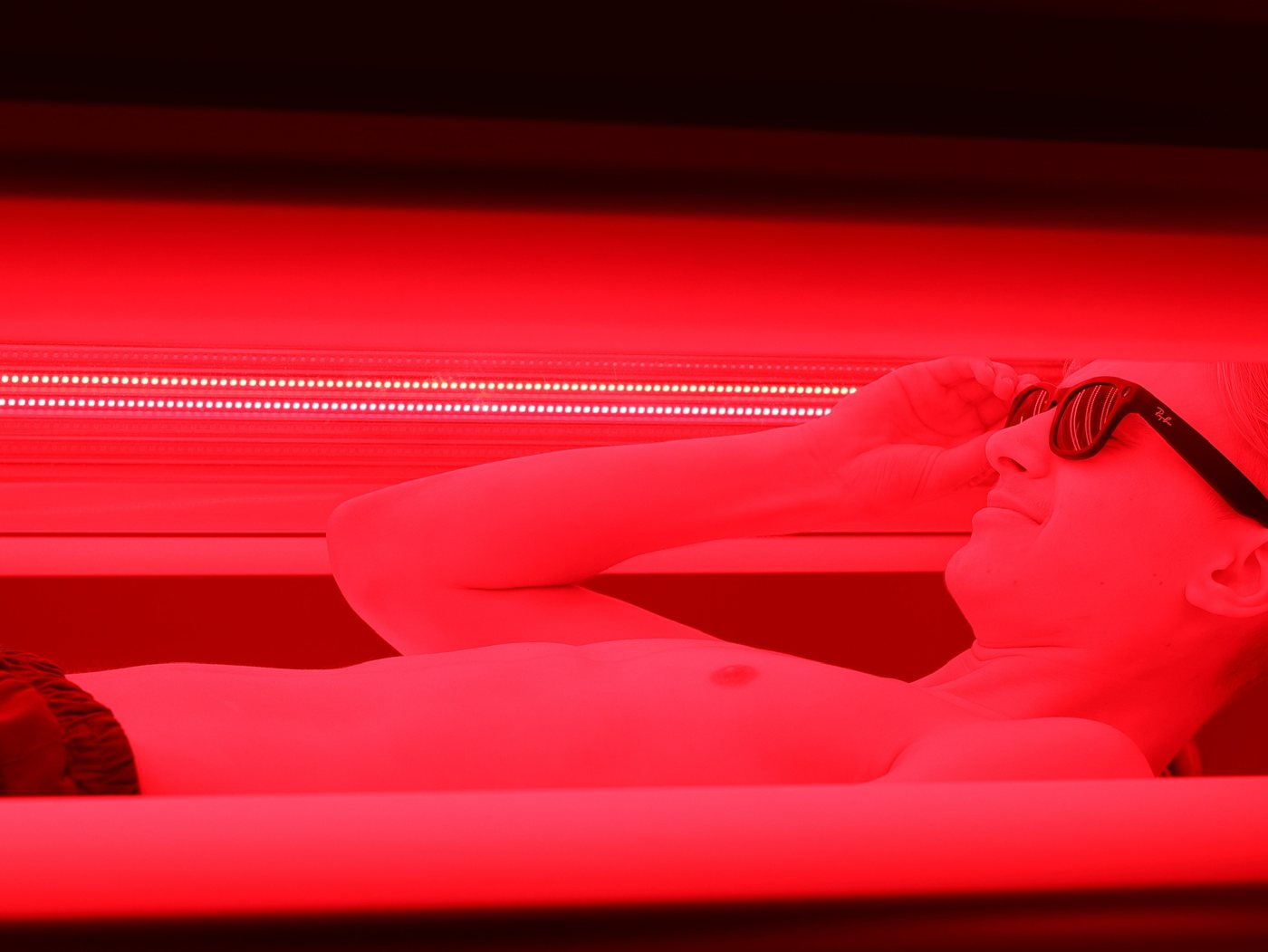
Lie back on a full-body bed and let warm red and near-infrared light surround you for 13 or 20 minutes. It feels like sun on your skin, with no heat to endure, so it slots easily into a lunch break or a calm end to the day.
What red light can do for you.
Skin, fine lines & complexion
Interested in smoother-looking skin, a more even complexion or softening the appearance of fine lines? Red light therapy is studied for skin rejuvenation and may support improvements in certain aspects of skin appearance. Results depend on the device and treatment protocol.
Muscles & joints
Whether you're training hard or dealing with everyday aches, red light is used for muscle and joint discomfort and function. Explore how light therapy might complement your recovery routine.
Hair & scalp health
Curious about light therapy for thinning hair? Certain red-light devices have been studied for pattern hair loss, with some evidence of improved hair density. The results depend on the device, and a general-purpose light bed should not be assumed to have the same effect as a dedicated hair-growth device.
What is red light and near-infrared therapy?
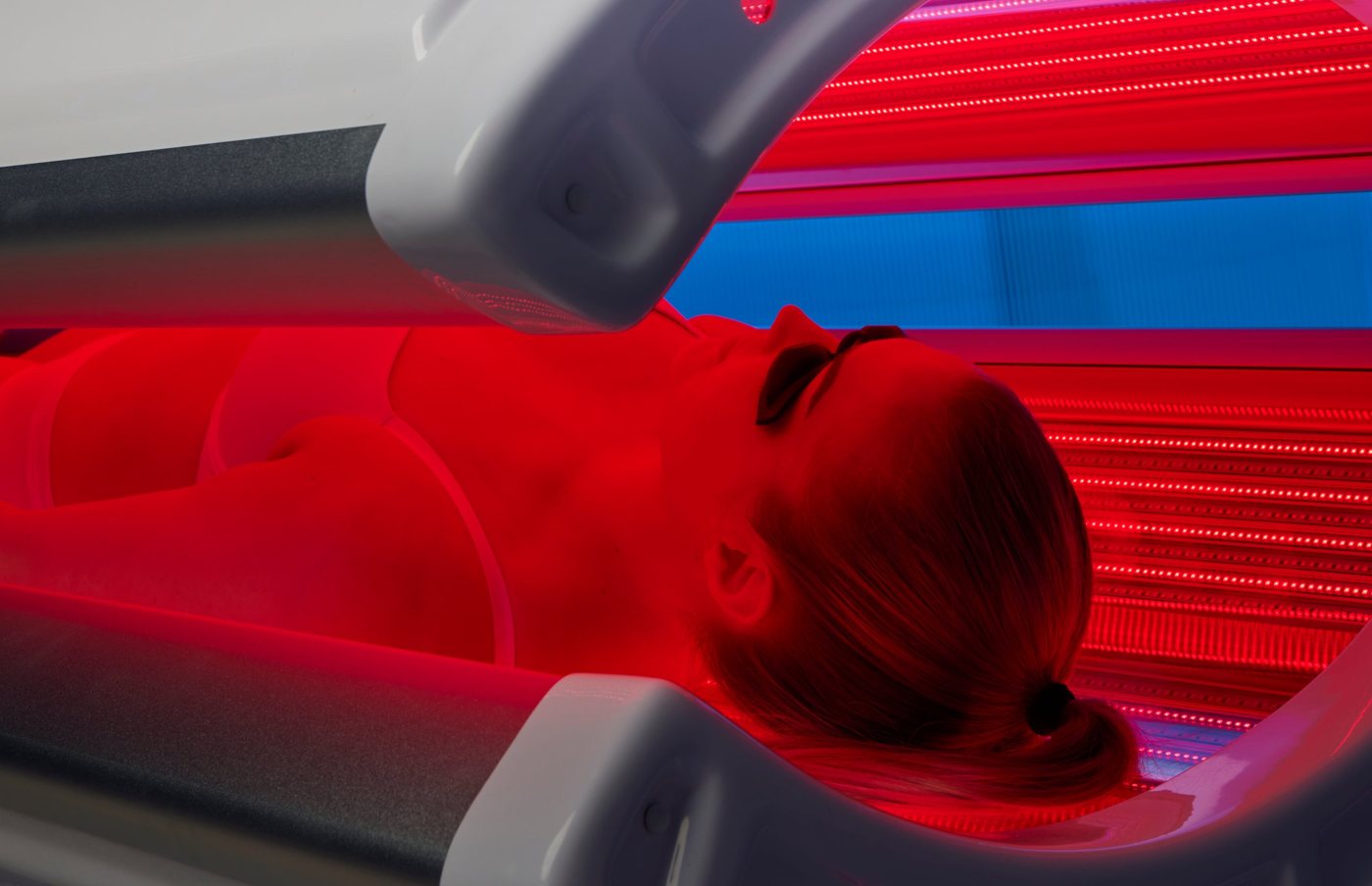
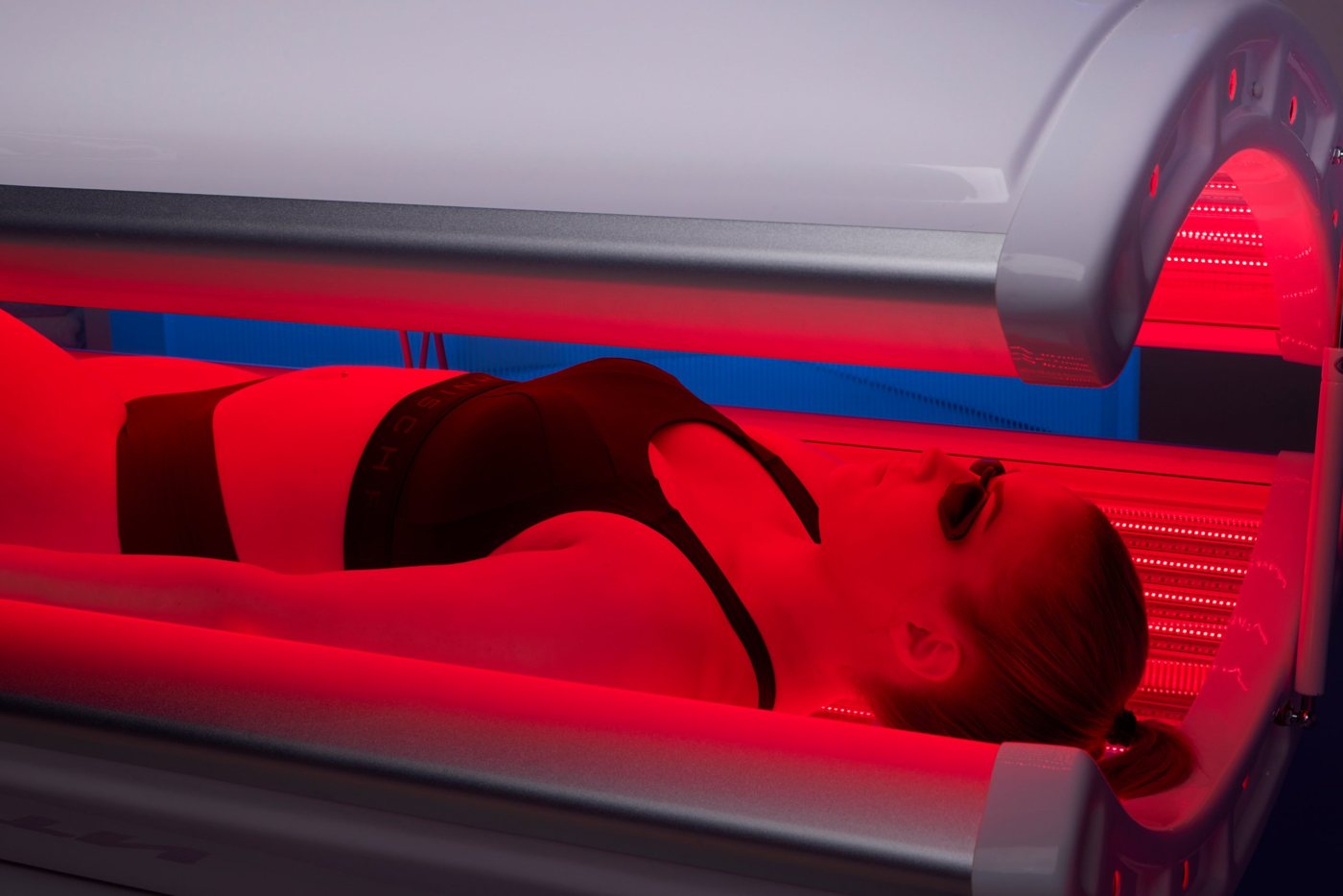
Red light and near-infrared therapy uses specific wavelengths of light delivered by LED panels. You lie on or in front of the panels while the light and a gentle warmth surround you.
Sessions are quiet and comfortable. You wear eye protection, and our team set up the bed and settings for you.
Designed to help you feel refreshed.
- ✓Improve skin health
- ✓Improve hair health
- ✓Reduce inflammation
- ✓Enhance tissue repair / healing
- ✓Improve sleep quality & quantity
- ✓Improve hormone health
Not sure it's right for you?
Red light therapy is not suitable for everyone, for example if you are pregnant, take light-sensitising medication or have certain eye conditions. Speak to your GP first if you have a medical condition, and message us with any questions.
Chat on WhatsAppReal people, real recovery.
What the research says.
Red light therapy is used in skin care, sport and recovery. Here is what published studies have found.
Red light therapy is not a substitute for medical treatment. Please speak to your doctor about any health condition.
Skin
Red and near-infrared light is widely used to support skin quality and ageing. In a controlled trial of 136 volunteers (Wunsch & Matuschka, 2014), 30 sessions improved complexion, skin feeling and roughness, and increased collagen density measured by ultrasound.
Muscle recovery and performance
Light applied before exercise is used to support endurance and recovery. A meta-analysis of 13 trials (Leal-Junior et al., 2015) found longer time to exhaustion, about 5 more repetitions, and positive changes in muscle-damage markers in 13 of 16 comparisons.
Joint and tendon pain
A 2022 meta-analysis of 18 trials (Naterstad et al.) found that red and near-infrared light significantly reduced pain and disability in tendinopathy and plantar fasciitis. Benefits lasted for weeks after treatment, including when added to exercise.
Osteoarthritis
A 2019 meta-analysis of 22 placebo-controlled trials (1,063 people, Stausholm et al.) found significantly lower knee pain and disability, with the biggest pain reduction 2-4 weeks after treatment.
Hair growth
A systematic review of 11 studies (680 people, Afifi et al., 2017) found that 9 of 11 reported improved hair count or density in men and women, with positive patient satisfaction.
Wound healing
A 2025 consensus of 21 international experts (Maghfour et al.) concluded that photobiomodulation is an effective option for wound ulcers of several causes and for pressure ulcers.
Mood and sleep
In elite female basketball players (Zhao et al., 2012), 14 nights of red light improved sleep quality, melatonin levels and 12-minute run performance. A 2023 meta-analysis (Cho et al.) found lower depressive symptom scores with near-infrared light applied to the head, which is early research.
Hormone health
This area is early. In a randomised placebo-controlled trial of 43 people with underactive thyroid caused by Hashimoto's (Höfling et al., 2013), 10 sessions of low-level light to the neck led to a much lower thyroxine dose (about 39 vs 107 µg/day) 9 months later.
In their own words.
5.0 from 86 Google reviews. Real client reviews, shown as written.
Single sessions and bundles.
Skin Booster (Blue Light Cryo Facial and red light) £45. The Pain Reliever (whole-body then local cryotherapy) £79. The Big 3 £135.
See all packagesCombine it and save.
Cryotherapy, red light, hyperbaric oxygen, compression, local cryotherapy and Blue Light Cryo Facial.
Book nowSimple from start to finish.
Quick chat
A short health questionnaire and a conversation about what you want from your sessions.
Get ready
Come with clean, product-free skin where possible. We provide eye protection.
Relax
Lie back for around 20 minutes of warm, gentle light. Music or a rest are both welcome.
Carry on
No downtime. Head straight back to your day.
Good questions.
What's a session actually like?
You relax while red and near-infrared light is directed at your skin. Our team will guide you through setup and stay close throughout. Most people find it warm and comfortable, and sessions last 13 or 20 minutes.
Is it painful, or does it get hot?
No. Most people find it gently warm and relaxing. Our team will explain what to expect before you start, and you can ask to stop at any time.
How many sessions will I need?
It depends on what you're using it for. Many people start with a short course of regular sessions and adjust from there. Our team can suggest a sensible plan, and results vary from person to person.
Is there a cheaper way than booking one session at a time?
Yes. A package of 6 sessions brings the price down to £28 per session for the 13-minute option, or £32 per session for the 20-minute option. Red light is also included in our day passes and some protocols.
What should I wear or bring?
Wear something comfortable that is easy to adjust. If you're treating a particular area, our team will tell you what needs to be uncovered and will make sure you're comfortable throughout.
Is red light therapy right for me?
It suits many people, but not everyone, for example during pregnancy or if you're light-sensitive or take light-sensitising medication. You'll complete a consent form before your first session, and our team is happy to talk it through. If you have a health condition, please speak to your doctor first.
Wed and Thu 09:00-19:00
Fri and Sat 09:00-16:00